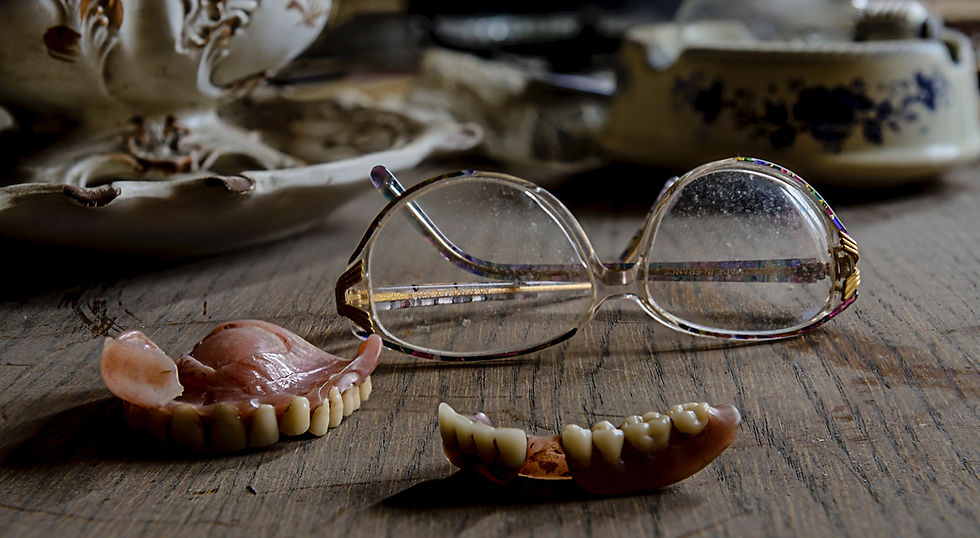
I’m about to lose a tooth, how long must I wait till I get a replacement?

Updated: Apr 21
Being told a tooth can’t be saved is stressful, and it’s completely normal to worry about how long you’ll be stuck with a gap. The reassuring part is that most people can have a temporary tooth fairly quickly, while the definitive (long-term) replacement usually takes longer because healing matters.
What decides the timeline?
There isn’t a cookie-cutter approach. The timing depends on factors like front vs back tooth location, gum and bone health, infection levels, and bite forces, which is why two patients can have very different timelines and both plans can be correct.
Option 1: Provisional dental bridges (immediate)
A bonded provisional bridge can often be placed the same day with materials already-present in the dental clinic, and it usually avoids damaging the neighbouring teeth. This is typically the fastest “fixed tooth” option, but it is meant to be temporary and may need replacement later.
Option 2: Immediate implant(s) with a provisional tooth/teeth (immediate only if suitable)
An implant or several implants can sometimes be placed immediately after extraction if the bone, infection control, and bite conditions are favourable. This is not suitable for everyone, and case selection matters.
A temporary tooth may then be provided early for appearance, and the final implant crown is usually fitted around 3 to 4 months later once the implant has integrated.

Option 3: Acrylic denture (usually 1 to 2 months; may be immediate if planned ahead)
An acrylic denture can usually be made soon after extraction, but it often takes a few appointments from start to finish. You must also decide if an acrylic denture is suitable long-term in your own personal circumstances (this other article may help).
There are also “immediate” dentures – dentures that are inserted on the same day – but only if it is planned in advance, which isn’t always possible especially when an extraction happens unexpectedly.
Option 4: Conventional dental bridge (2 to 3 weeks after reasonable healing)
A conventional (prepared) bridge is usually planned about 2 to 3 weeks after the gums and bone have healed, and it tends to be more secure and longer-term. Many permanent options need some healing first because gums and bone naturally shrink after a tooth is removed.

Option 5: Conventional or delayed implant (minimum 6 months)
A conventional implant is commonly placed after initial healing, often around 3 to 4 months after extraction, and then the final crown is typically done another 3 to 4 months later. The total time to have a permanent tooth in this scenario is about 6 to 8 months.
However, if after healing the bone has shrunk too much and bone rebuilding (bone grafting) is needed, it may add another 3 to 4 months of healing time before an implant can be placed predictably, dragging the total time to have a permanent tooth replaced to 9 to 12 months.
Putting it together
You often don’t have to go without a tooth for long, because temporary options can usually be arranged early. The final tooth replacement, however, takes longer because the gums and bone need time to heal and stabilise. The best plan is the one that balances appearance, comfort, long-term maintenance, and what your mouth can safely support.
If you’re feeling worried about being left with a gap or if you know that you have a tooth on its way out, a consultation can help you understand what can be done immediately and what can be planned after the gums and bone settle.
About the author
Dr Jeremy Peter Chitty is a dental surgeon practicing in the Serangoon area of Singapore, with a focus on helping patients with complex dental conditions through comprehensive treatment planning, dental implants, and long-term rehabilitative care.